.png)


Interview with Sarra Ryma, What Do the Maknines Dream Of director
by Esther Brejon
by Esther Brejon
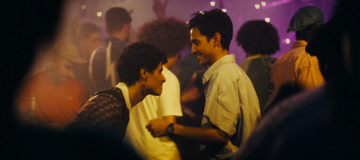
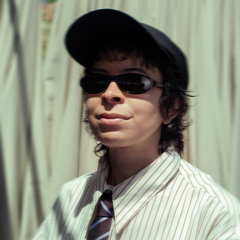
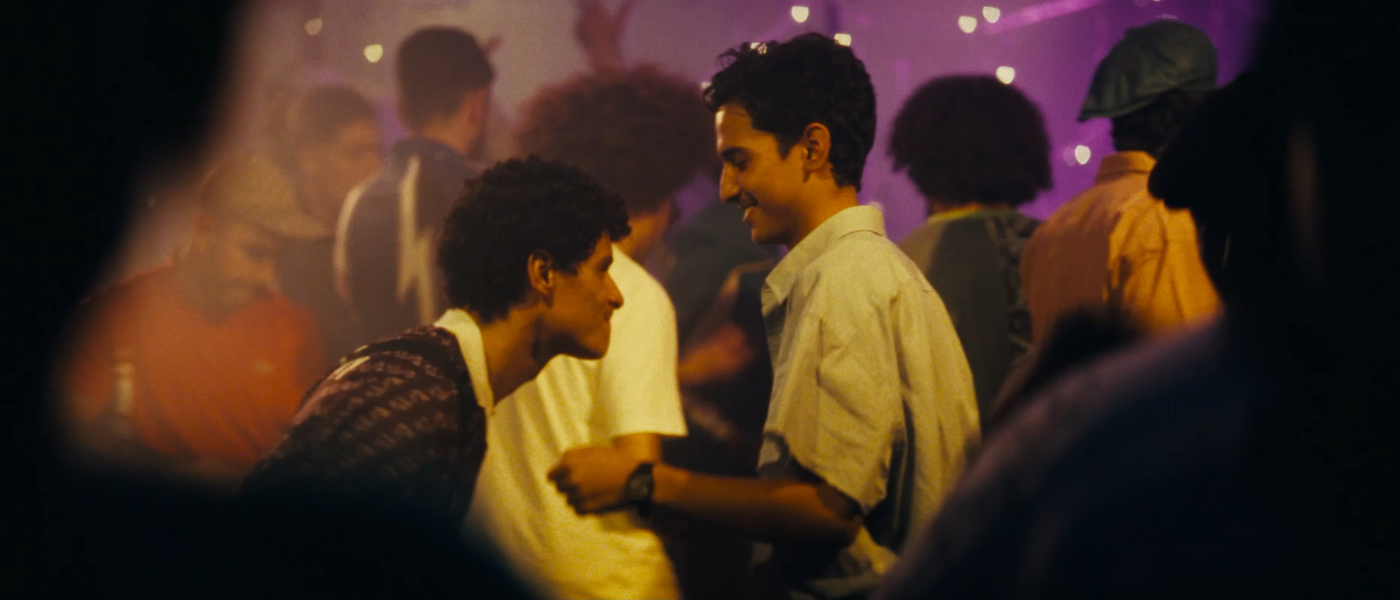
An all-encompassing friendship, a singing goldfinch, and the call of the open sea. Through the story of Kacim, a seller of maknines, and his friend Malek, Algerian director Sarra Ryma tells a story about friendship marked by the desire to leave. In the labyrinthine streets of Algiers, cradled by birdsongs, the sounds of the seaside city, and improvised songs, these two friends embody Algerian youth - past and present.
Interview with Sarra Ryma
Where do the characters of Kacim - the seller of maknines - and Malek come from?
I grew up in Algiers among boys, with my brother and my cousins, I was a bit of a tomboy. What always struck me was their sensitivity. A very powerful sensitivity, yet often restrained or held back. In Algeria, maknines are beloved, almost mythical, birds. Their songs immediately evoke something about the country. I was moved by the bond that some men have with them. There’s a kind of modesty about them, even harshness at times, but with their birds, gentleness overflows. This is how Kacim came about: a boy who speaks little but loves deeply.
How did you find the right tone to tell the story of such a powerful friendship?
I think it came about quite naturally, by trying not to define their relationship. I wanted to tell a love story, but rather a kind of love that isn’t necessarily connected to a sexual orientation. For me, the film is about love in the broadest sense of the word. One that finds little expression in words. An Algerian kind of love: reserved, silent, sometimes cryptic. What interested me was how feelings can sometimes exist without putting a word to them. In the film, music sometimes takes over when one cannot speak.
How prevalent is the desire to leave in the imagination of young Algerians?
I think the desire is very present, but it isn’t just about leaving. I see Algeria as a country shaped by movement, a country of sailors, privateers, migratory birds. Today, however, these forms of movement have become much more difficult. So this longing exists, naturally, but it is often mired with something else – contradictions, attachments, hesitations. And that’s what interested me: that moment when something calls upon you to leave, and at the same time, holds you back.
The film is steeped in music and noise.
Algiers is not just a noisy city, it is almost a symphony. There are voices, streets, markets, music blaring out the windows, calls to prayer, and silences too. We say that New York never sleeps, well Algiers never shuts up. I grew up with that, with raï music, chaâbi, tapes, and many influences from elsewhere. In the film, music is a language. It says what the characters do not express verbally.
At La Semaine de La Critique