.png)


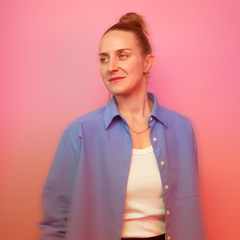
Interview with Laïs Decaster, Love Story director
by Raphaëlle Pireyre
by Raphaëlle Pireyre
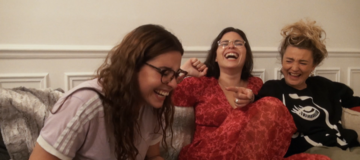
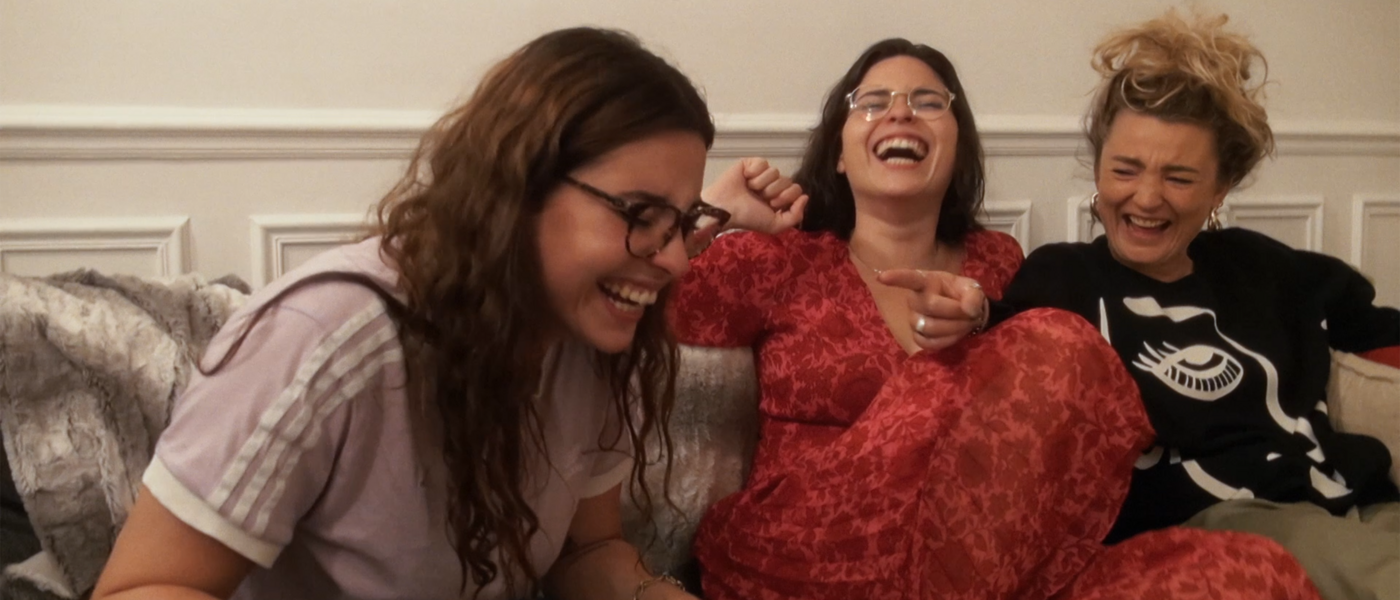
Alyssa has met a man, but he’s already in a relationship… From this simple, fragile, and ill-fated budding story, Laïs Decaster delivers a meditation on love and friendship. Alone in front of the camera, then later joined by her twin sister and an ever-growing number of friends, Alyssa charts the evolution of her feelings over twelve months, which structure the film into chapters. A Rohmer-like tale with an all-female cast shot entirely in the intimate setting of a small living room, Love Story achieves the oxymoronic feat of bringing before our very eyes the vast story of collective friendship while speaking exclusively of relationships, sexuality, and romance.
Interview with Laïs Decaster
You regularly film your loved ones spontaneously – how do you decide when a film is being born?
It depends on each film. From the first time I shot my friend Alyssa telling me about her budding story, she spoke with such passion and seemed to enjoy being in front of the camera so much that, in this case, I immediately felt there was a film there. I had filmed her in J’suis pas malheureuse and I loved her presence. My films are very connected to one another; I film my friends, my sister. It’s really a coaching community, everyone knows each other. My desire to film comes from what happens to them. I didn’t think this story would hold, I initially thought I would show her outlook on love and relationships in general. I filmed her about once a month, which eventually became the chapter structure of the film. I immediately understood that it would be an episodic film and that we had to understand that time passes.
At first, the film seems like a drama, but it is told with a great deal of humour.
Alyssa has something of a magician about her; she reads tarot cards, for instance, she is an exceptional storyteller. She talks about female sexuality very naturally. All of this echoed the themes illustrator Amina Bouajila explores in her work; so I commissioned her to create the drawings that structure the film into chapters, as a counterpoint to what is spoken in the film. The work on music also shifts the tone of the film. In the editing room, I had put a minimalist cover of Paroles, paroles by a Japanese composer. Théo Cancelli, with whom I have been working for a long time and who did the soundtrack for La Peau dure, took the theme in another direction, which adds a great deal to the film.
Your work sketches a kind of generational portrait of love, desire, sexuality, relationships through this very intimate story.
It is true that, through my loved ones, I perceive something about our generation; but while filming them I mostly think about how good I feel being with them that others need to see them too. I want to show that these women aren’t afraid to speak because we have built a very tightly-knit group against the rest of the world, against romantic or professional difficulties. What matters to me is how you tell your own story, and how what first seems like a small adventure can, through speaking about it and what these women make of it, become something much bigger.
At La Semaine de La Critique