.png)



Interview with Aude N’Guessan Forget, Man'mi director
by Tristan Brossat
by Tristan Brossat
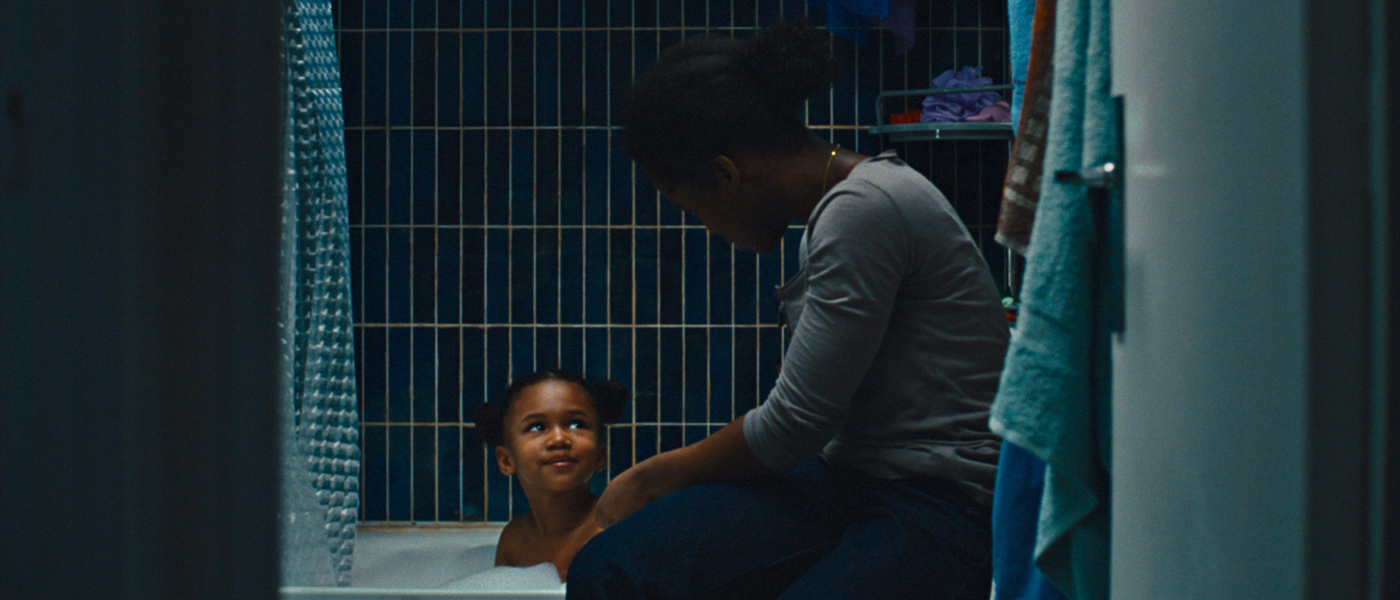
Straddling social drama and folktale, Man’mi intertwines the legendary story of the Baulé queen Abla Pokou and the traumatic memories of director Aude N’Guessan Forget. Combative yet gravely ill, Hortense contends with a healthcare system that minimises her pain because of her origins. Her daughter Flora takes it upon herself to save her. Tinged with magical realism, the film’s mise-en-scène allows the rainforest to seep into a daily life shaped by hardship and tenderness.
Interview with Aude N’Guessan Forget
Overcoming ordeals through tales
I had long felt the need to tell this extremely violent story for a long time, without really knowing how to go about it. Going back to the little girl I once was, I remembered that, in order to overcome this traumatic ordeal, I constructed a story that resonated with the tales my mother and aunts used to tell me. I remembered this founding Baulé myth: the rather harrowing story of Queen Abla Pokou, who sacrificed her own son to save her people. Using folktales allowed me to grapple with this very abstract concept of death. LIke me, Flora slightly transforms the myth by introducing a crocodile which she sets out to kill in order to save her mum.
Magic realism
If I chose to bring the rainforest of the tale into the apartment, it’s simply because, as a child, I truly saw these imaginary landscapes take shape in my daily surroundings. I am very drawn to magic realism, which is also found in the beautiful Atlantics by Matti Diop and Sons of Ramses by Clément Cogitore.
Racial bias and pain
When I heard about the case of Naomi Musenga – this woman who died in 2017 after her emergency call wasn’t taken seriously – I was deeply shaken. I didn’t think that anyone else had a similar experience to my mother’s. I absolutely had to talk about it, I had to address this manifestation of systemic racism, known in French as “syndrome méditerranéen”: the tendency within the medical profession to underestimate the pain experienced by people of foreign origin, especially those of African descent.
Fatality and hope
To write Man’mi, I contacted organisations supporting people living with sickle cell disease, a genetic condition that primarily affects Black people. I was told that in emergency rooms, patients requiring blood transfusions were sometimes mistaken for drug users by the staff because of the bruises on their arms. Sickle cell disease is a hereditary blood disorder. Its metaphorical dimension is very powerful because it can be experienced as fate. But it was important for me to end on a hopeful note. Faced with this terrible ordeal – the symbolic sacrifice of a mother who has never stopped protecting her from the pains of life – Flora never gives up..
Matriarchal society
The film’s almost entirely female cast is the simple reflection of my childhood, surrounded by my mother and aunts. Baoulé society is deeply matriarchal. It was crucial for me to cast Baoulé actors who speak the language. Since they’re inspired by my own family, I wanted the character of the mother and her sisters to feel authentic. It took a lot of time because there are very few Baoulés in the arts. Jade Sidbé, who plays Flora, is not Baoulé. But her eyes, which seem to discover the world with every glance, deeply moved me.
At La Semaine de La Critique