.png)


Interview with ZOU Jing, A Girl Unknown director
by Laurent Hérin
by Laurent Hérin
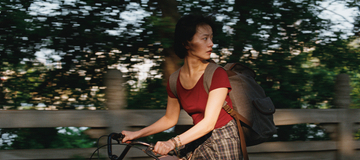
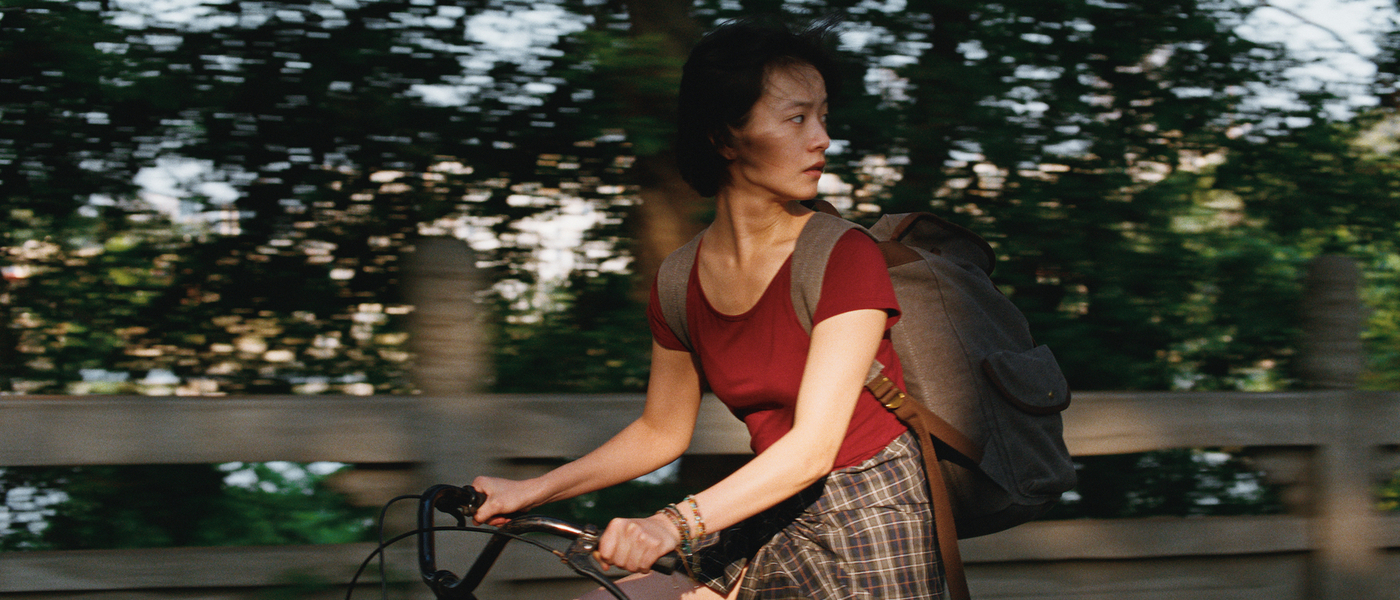
A Girl Unknown, director Zou Jing’s debut feature, follows a young Chinese girl’s search for identity as she is passed to three families between her childhood and adolescence. An intimate and deeply moving story that sheds light on the fate of young abandoned girls in China between the 1980s and 2000s.
Interview with ZOU Jing
Is your movie a coming-of-age story?
Yes, the coming-of-age story of a young girl’s journey from childhood to adolescence in three different families, searching for her own identity and belonging, and the redefinition of love and family.
Why did you choose this subject ?
The story was inspired by my Nai Nai (paternal grandmother), who partly raised me and to whom I was very close, was abandoned shortly after her birth in 1936 and taken in by a family in another village. I only learned this after she passed away. I have found myself imagining her childhood— how she grew up carrying that absence. Beneath her strength, did she ever cry quietly at night? She was a woman of extraordinary resilience—unyielding in the face of hardship, yet always gentle and tender toward others. The character in this film carries her spirit. And a few years ago I also came across an article about a couple who had entrusted their little girl to another couple and who, ten years later, began searching for her in an attempt to get her back. They discover that, after being abandoned once, their daughter had ended up with a second adoptive family. These events moved and inspired me. I then met several young women who had lived through similar experiences. They were born in the late 1980s and grew up in the 1990s, when girls being abandoned or given away seemed to be quietly accepted.
Back in the days when a couple had a first daughter, they would try for a second child, and if it was still a girl, there was a risk that she would be abandoned. It was common for this second daughter not even to be officially registered. As a result, that child had no status, as if she had never existed. All of this was extremely cruel and took place quietly and silently. I therefore decided to anchor my story in that era, convinced that it was important to shed light on this social phenomenon. While much has changed over the years, the imprint of that history remains, and its generational trauma continues to resonate today.
How did you find the actresses?
We spent a lot of time looking for the child. I didn't want a trained young actress, but a fresh face, someone natural, capable of fully existing in front of the camera. When I met CAO Ruofan, it was love at first sight. Her presence is instinctive, extremely natural. I chose not to give her the script, so she would never guess what was coming next and could remain fully present in every moment. I guided her step by step, and she never ceased to surprise me.
LI Gengxi, who plays the teenage Wu Lian, brought a different kind of depth. She has a great deal of experience and sensitivity, and it was very easy to work with her. We understood each other instinctively.
Your short film Duo Li, won the Leitz Prize at La Semaine de la Critique in 2021.
I’m very grateful to be returning to Cannes with my first feature film, especially to Semaine de la Critique, where I also took part in the Next Step program and won the Hildegarde Prize.
At La Semaine de La Critique