.png)


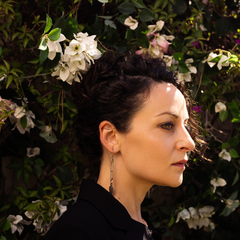
Interview with Sara Ishaq, The Station director
by Laurent Hérin and Gautier Roos
by Laurent Hérin and Gautier Roos
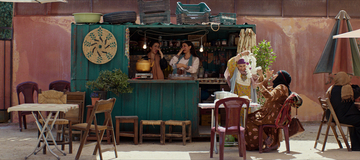
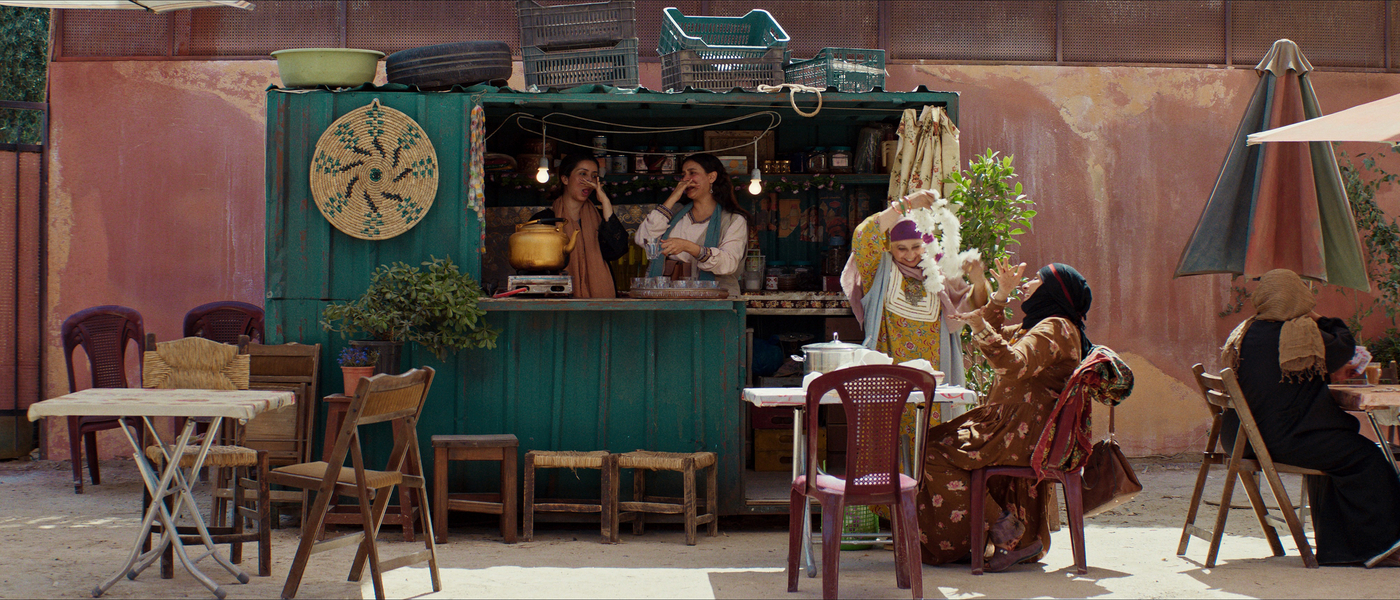
The Station is set in a nameless village ravaged by civil war. For women, there’s only one refuge: the petrol station run by Layal. The film celebrates their sisterhood, empowerment, and resistance in the face of an authoritarian regime, with surprising energy and hints of burlesque.
Interview with Sara Ishaq
After your documentaries, why did you choose to make a feature film? After years of working on documentaries, I had to contend with negative media coverage of Yemen that depicted it as a country perpetually consumed by poverty and devastation - one that only dehumanised Yemenis. I wanted to convey a multifaceted narrative that showed Yemenis as complex, dignified human beings, whose lives were full of culture, humour and love - as they truly are. I was particularly moved by the resilience and wit I witnessed among the women in my hometown Sana'a during the war, and initially set out to make a documentary centred on a women-only petrol station that popped up in my neighborhood. But the women I spoke to were reluctant to be filmed. Fiction gradually became a way to portray the stories I'd heard with creative freedom, while protecting the people who inspired them.
You managed to film in Yemen, a country still at war?
Filming in Yemen was impossible because of the security risks and production constraints while working. Jordan became the natural alternative, with skilled crews, landscapes close to Yemen’s terrain, and long-established Yemeni refugee and diaspora communities that proved invaluable for casting.
Despite heavy subjects (war, the loss of loved people), the film is punctuated of humor. Was this a way of taking the edge off the drama ?
Humour can disarm us and make the drama that follows hit harder. While I admire the deadpan absurdism of Elia Suleiman, humour here was not conceived as a device so much as a reflection of how people around me lived through war. In such times, humour becomes a way to stay sane and hold on to family, community and small moments of joy. I used it to show both my characters’ humanity and the absurdity of a world that no longer made sense.
How did the casting process for these vibrant characters ?
The characters were inspired by real Yemeni women I’ve known, but casting was a major challenge. We launched an online open call and held over 120 auditions with Yemeni women living in Yemen and across the diaspora. We eventually brought together a mix of experienced actors and non-actors based in Yemen, Egypt and Jordan, then held workshops in Cairo focused on improvisation and naturalism. Many had never acted before, but they brought these women powerfully to life.
How was the project financed?
The film was financed through a co-production between Jordan and Europe, with support from regional funds and several European partners. We also secured pre-sales at script stage. For a film from Yemen, which has no national film fund, this kind of structure is often the only viable path.
At La Semaine de La Critique