.png)


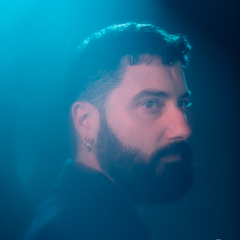
Interview with Pierre Le Gall, Flesh and Fuel director
by Chloé Caye
by Chloé Caye
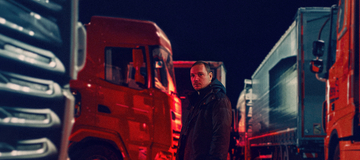
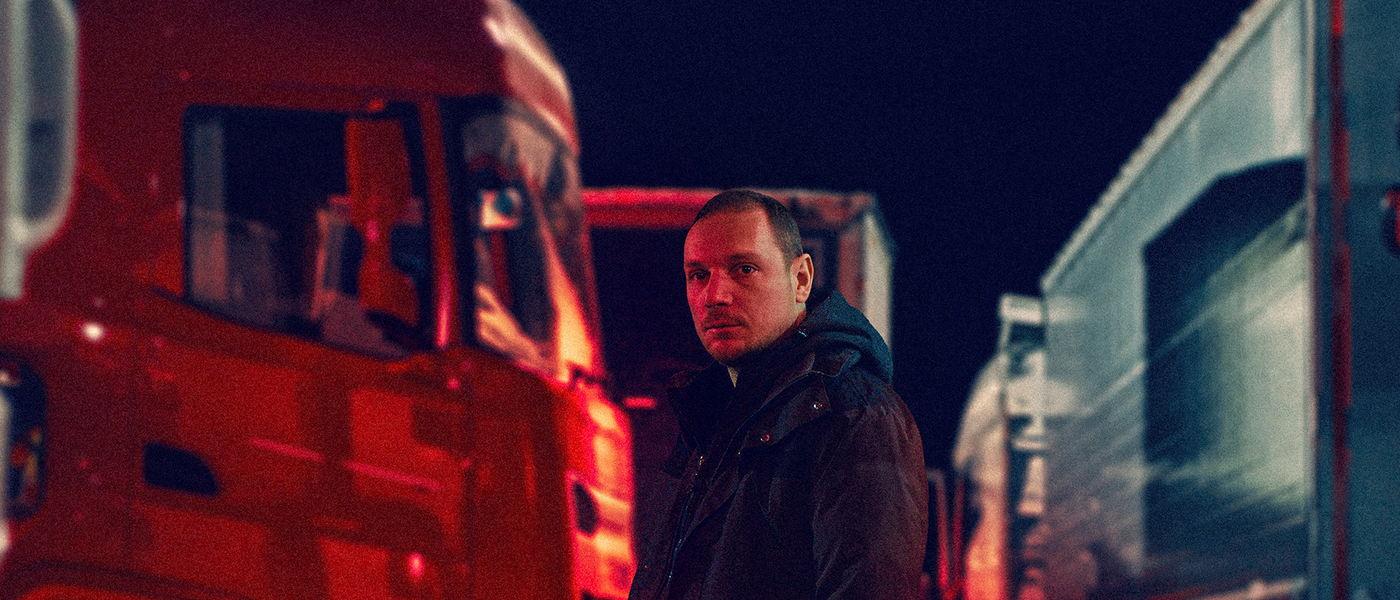
Etienne is a solitary truck driver. When he meets Bartosz, a Polish peer, he falls instantly under his spell. But will these two men, struck by love at first sight, be able to forge a bond despite their job and the different routes it imposes on them?
Interview with Pierre Le Gall
Your film is a near-documentary immersion in the world of long-haul trucking, what research did you carry out to prepare for the shoot?
I rode along with a truck-driver friend to experience the road physically: the endless days and nights, the warehouses, the roadside restaurants, the sleeper cabin… What struck me the most was this contradictory relationship to time: on the one hand, the constant stopwatch ticking in your head and the stress of making it on time; on the other, that feeling that time stretches endlessly between each destination. On these journeys, I took note of each movement that relates either to work or to his private life, and every safety procedure. All of this allowed me to be precise in my writing and in directing the cast and crew.
Beyond its political and social perspective, the film ventures into a rather unusual register for this kind setting and these characters: romance. Why did you want to blend the two?
I always saw Flesh and Fuel as a romance. The film stems from a simple desire: to see two relentless workers experience a great love story. I wanted to give these two truckers the right to beauty and freedom. I wanted all these non-places specific to the truckers’ world – originally designed to regulate the flow of goods – to be overtaken by my characters’ feverish love. In that sense, the love scene in the truck came very early in the writing process. Étienne and Bartosz use their work tool to get it on: I saw that as an act of human rebellion!
There’s obvious chemistry between the two lead actors. Did it take you long to find this ideal pair of bodies and talents?
I brought Alexis Manenti to Warsaw to meet Julian Świeżewski. From the very first moment of the audition, it was obvious: their energies complemented one another and I sensed real playfulness between them, a desire to act together and to surprise one another. Before the shoot, we got together with an intimacy coach to choreograph the sex scenes. This process allowed them to discover each other’s bodies and sensibilities. They each had their own vulnerabilities: Alexis was very reserved and Julian didn’t speak a word of French. They reassured and supported each other. Like a real couple.
You’re a screenwriter and it’s your first film as a director. While we feel the importance of dialogue, the visual language is never overlooked. How did you work on this fully realised form?
The golden rule was to tell a sensory, physical story. Emotions had to come foremost from looks, gestures, bodies, and the editing of scenes. I wanted the mise-en-scène and music to convey to the audience the sensations we feel when we fall in love: a racing heart, excitement, longing, solitude… The action scenes, the surging synth, the breathless editing, the ecstatic bodies, and the sheer scale of the trucks: it was all designed with generosity to offer the audience a rich cinematic experience!
At La Semaine de La Critique