.png)

Interview with Julien Gaspar-Oliveri, The Blow director
by Marilou Duponchel
by Marilou Duponchel
Interview with Julien Gaspar Oliveri
Origins
I’ve always wanted to make a film about fatherhood. Gradually, a first version emerged which tackled the issue in a fairly direct way. I then did a lot of research to move away from my story and engage with other experiences. I didn’t want to make an autobiography because the subject calls for something universal. The real question is: why is it so hard to stop loving one’s parents? I’ve always been obsessed with family ties, especially the question of inheritance – whether we want it or not – and by the way parents seem godlike for a long time, before becoming our tormentors.
Approach
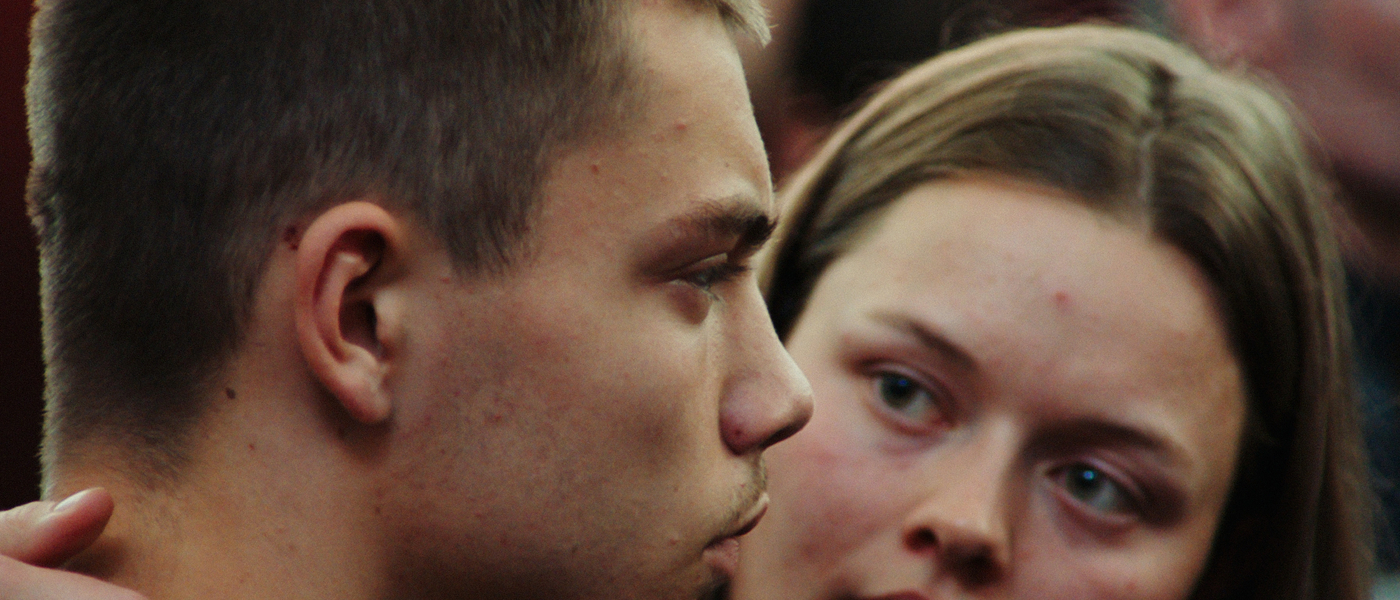
I’ve always wanted a documentary-style camera, something unsettled. I’ve been working on this aesthetic for a long time with Martin Rit. Zooming in allows us to go beyond the script, where things remain unsaid, where everything is under the skin, internalised. We laugh, we shout at each other, but we never name the real issue. The camera signals that something monstrous is about to happen. Once it is out,; we try to reverse the movement, to show that the monster cannot be seen, that it doesn’t scare us. The film is about the inability to say the words.
Actor/director
I’ve been acting since I was eight. At the Conservatoire, I felt like theatre alone wouldn’t be enough. I started directing because I wanted to go into greater detail. When I direct, I try not to separate my desire as an actor. I like to give a lot of space. I create the working conditions I would have loved as an actor. I had long conversations with all the characters to break down each scene, build the dramaturgy and bring out what’s at stake. I don’t rehearse, we shoot immediately. There’s no hair, make-up or wardrobe on my sets, in order to keep a kind of documentary realism. What I’m looking for in actors isn’t the moment they leave themselves alone, but rather the moment they have something else to focus on than themselves or how they’re supposed to act.
Actors and actresses
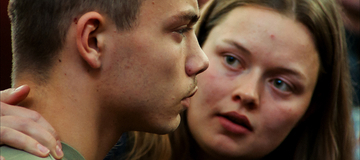
We made the film very quickly, with limited resources, and we shot it in 22 days. Casting had to be done fast. I asked Bastien [Bouillon] because I’ve known him for a long time – we were at the Conservatoire together. Bastien has rare qualities as an actor: this incredible density while giving the impression of doing very little. I had noticed Diego [Murgia] in a video interview. I love his looks – somewhat slight and childlike, a spark in his eyes and a smile on his lips that seem to escape him. I saw many actresses, but I couldn’t find the fragility I was looking for. Over the summer, I looked outside of the talent agencies and I met Romane [Fringeli] through a friend. She lives in Switzerland, so we met very late. As soon as I saw a picture of her, I knew she was the character. She learned everything on the job. She convinced me immediately, and I was keen to witness someone come into being on set.
At La Semaine de La Critique