.png)


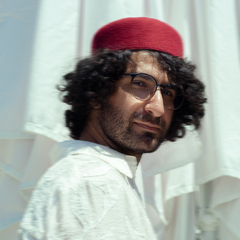
Interview with Daood Alabdulaa, Nafron director
by Léo Ortuno
by Léo Ortuno
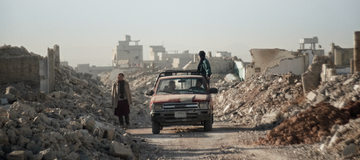
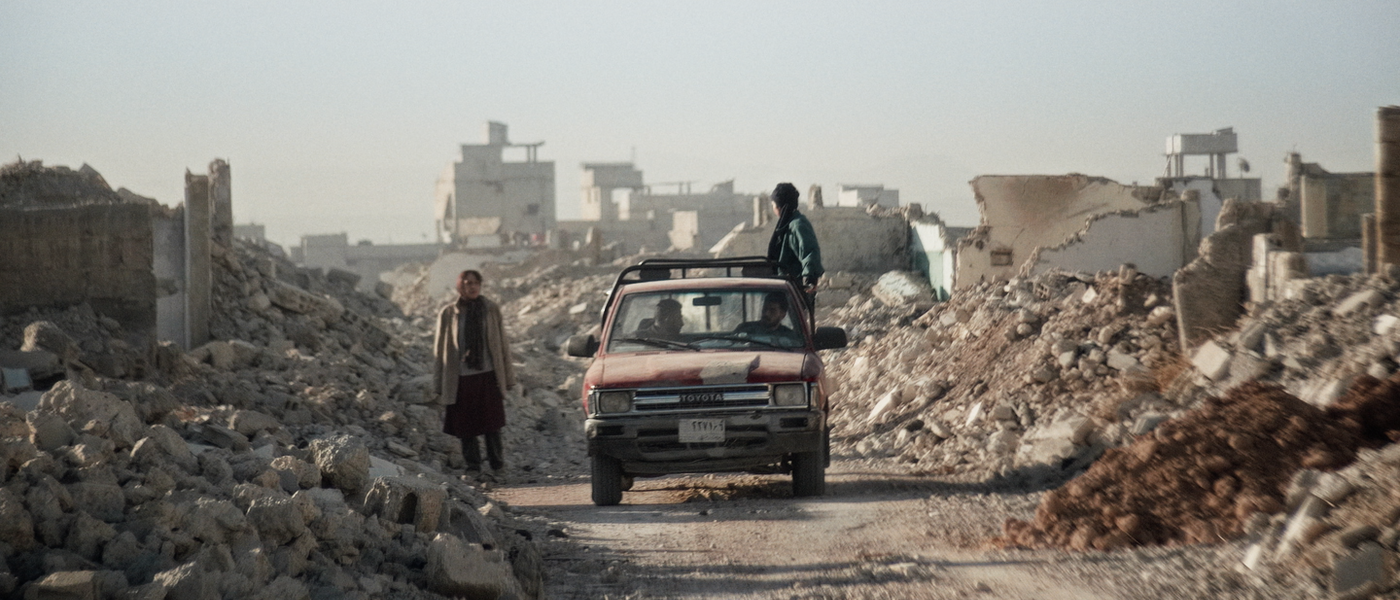
Not long after the fall of Bashar al-Assad, Nafron depicts a ghostly Damascus. In these sprawling ruins, two survivors wander in search of answers and connection. Daood Alabdulaa displays astounding formal command as he documents this city suspended in time, where tragedy echoes beyond Syria’s borders. Yet, at the heart of despair, he also manages to infuse the film with a vital force, tracing a path from solitude to encounter, from destruction to fragile reconstruction.
Interview with Daood Alabdulaa
Living through the fall Bashar al-Assad
The Ba'ath party and Assad’s family have ruled Syria for over 60 years. I have rebelled against this corrupt and oppressive system and paid for it by being imprisoned twice. I had to flee the country, became a homeless refugee and started a new life in Germany knowing that I would never be able to return to my home again. And then, within a couple of weeks, Assad’s regime collapsed like a paper house – nobody saw that coming.
When returning home for the first time in over ten years, I was confronted with a country that had to rebuild itself. But after all this oppression of thoughts, ideas, and identity, a question lingered in my subconscious: as Syrians, who are we? At the same time I felt the urge to capture this broken but free city of Damascus. I wanted to look at it, preserve this moment, and share it with the world before the wound closes and becomes a memory, which ideally will help us form a new, forward-looking identity as Syrians.
Two women in search of identity
I built these two characters that stand for these two sides of how to handle loss in a post-war society. Shortly after Assad's fall, the prisons were freed, and some of the people who had been imprisoned for years had simply lost their memory. I was inspired by that and the main character is looking for herself. The other one is looking for someone she loves. I searched for my brother in 2012 for months, and it was such a consuming situation. It becomes your identity. These two women meet each other in Nafron. The movie title is an Arabic word that describes a person who has no valued identity, who is invisible and exists at the fringes of society.
Filming a city of ruins
I decided not to include the parts of Damascus that are still standing. which I can promise they exist. Damascus today can be such an active, fun city too. But for this film, we wanted to shape visuals that should be a depiction of the characters' emotions. So we decided to focus on the broken parts of the city.
I had a closer look at the German “Trümmerfilm” which turned out to be very interesting visually, as they also frame broken ruins of cities as characters. The situation was so much bigger than any single person’s fate, and I wanted to show these dimensions that the people of Syria faced by the simple size of the frames. The pictures are sad, but I feel like there is some hope within them too. By having a very stable camera, wide-open shots, and long-standing takes, I feel like we reduced the stress. There is no imminent threat, but silence and a calm, which I hope, drive the film away from being a story about victims but rather survivors who begin to stand tall and proud.
At La Semaine de La Critique