.png)


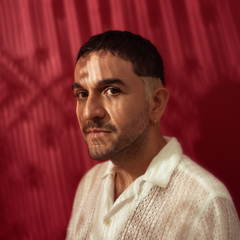
Interview with Bruno Santamaría Razo, Six Months in a Pink and Blue Building director
by Ava Cahen
by Ava Cahen
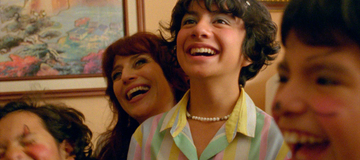
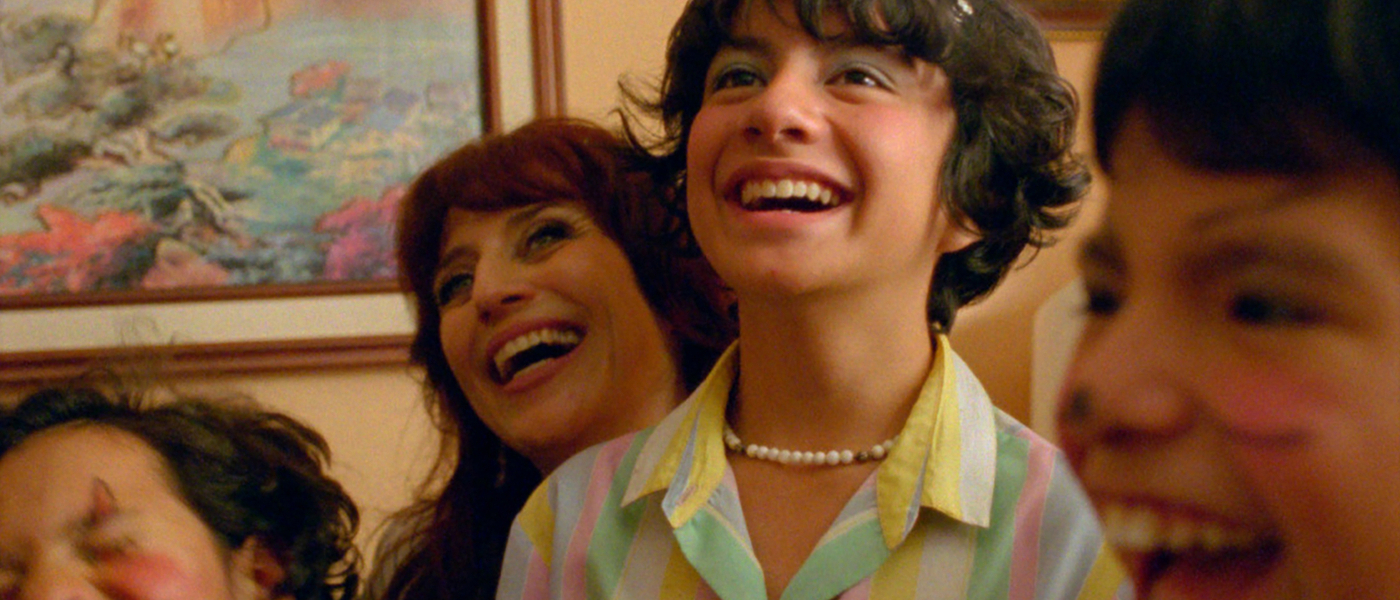
In this novelistic family drama, Bruno conjures up his childhood memories, shrouded in the mystery of his father’s illness in the 90s, a time when HIV awareness was still fragile and the stigma persisted. A film awash with warm tones that celebrates love and childhood, gracefully playing with the conventions of documentary and home movies.
Interview with Bruno Santamaria Razo
First films often have an autobiographical background. Here, you draw on your memories of youth, trying to fill in the gaps and solve certain mysteries. Fiction and documentary blend seamlessly together. How did you manage to create such a beautiful synergy ?
I didn't know I wanted to make a fiction film. I began by conducting interviews with my family, trying to provoke thoughts and make sense of something that was painful to me and that I didn't fully understand about my childhood. When I finished those interviews, I was deeply moved, but also more confused. So I started to write. And in that process, searching through memory and sensations, I realized I wasn't only working with memory; I was also imagining, inventing. Fiction emerged in this way, almost without my noticing, as a tool to look back again. Not to reconstruct a factual truth, but to approach an emotional truth. It appeared out of necessity, a way of returning, of looking again, of feeling the past. I'm moved by being behind the camera and being able to believe that what I'm looking at is truly happening. Together with the team, we try, both in interviews and in constructed scenes, to create an environment that allows us to sustain that belief. For me, it's important to approach everything we film with the same intensity and sense of truth, whether it's an interview, direct cinema that intrudes into someone else's reality, a staged scene directed by me, or even a deliberately artificial choreography.
In many ways, this film is magical, and the actors' performances really bring out that magic. How did you cast young Bruno, his father Mundo, and his mother Diana?
I worked with two incredibly talented friends, Lau Charles and Meraqui Pradis. We carried out many searches, but the main one was a workshop at the elementary school where I studied, a large, beautiful public school with around 1,500 children. For about a month and a half, we held workshops there, and from that process we began inviting several children to a smaller space outside the school, which also functioned, in a way, as a casting process. Although the rest of the group of children in the film emerged from there, we didn't find Bruno through that process. One day, we went to see a play, and outside, near the ticket line, we saw a child with enormous eyes wearing a crop top. Meraqui looked at me as if to say, "we have to go talk to them." To make a long story short, it was love at first sight. That's how we met Jade Reyes, and from that moment on, a connection began that has deeply transformed me personally.
I met Lázaro Gabino, in a play where he was the only actor. His way of storytelling, of playing, flirting, and seducing captivated me immediately. He reminded me of my father when he was young. At the time, I didn't see a physical resemblance, but that didn't matter to me; what interested me was his energy.
I had met Sofía Espinosa, some time earlier when I was working as a cinematographer on a short film in which she was acting. However, it wasn't until a mutual friend suggested we meet to talk about this project that it became clear the role was hers. Her ability to hold any of my ideas with care and openness connected me directly to the character. We worked closely with her, alongside my mother, who gave us aerobics classes and trained us.
At La Semaine de La Critique