
.png)


Interview with Blerta Basholli, Dua director
by Chloé Caye
by Chloé Caye
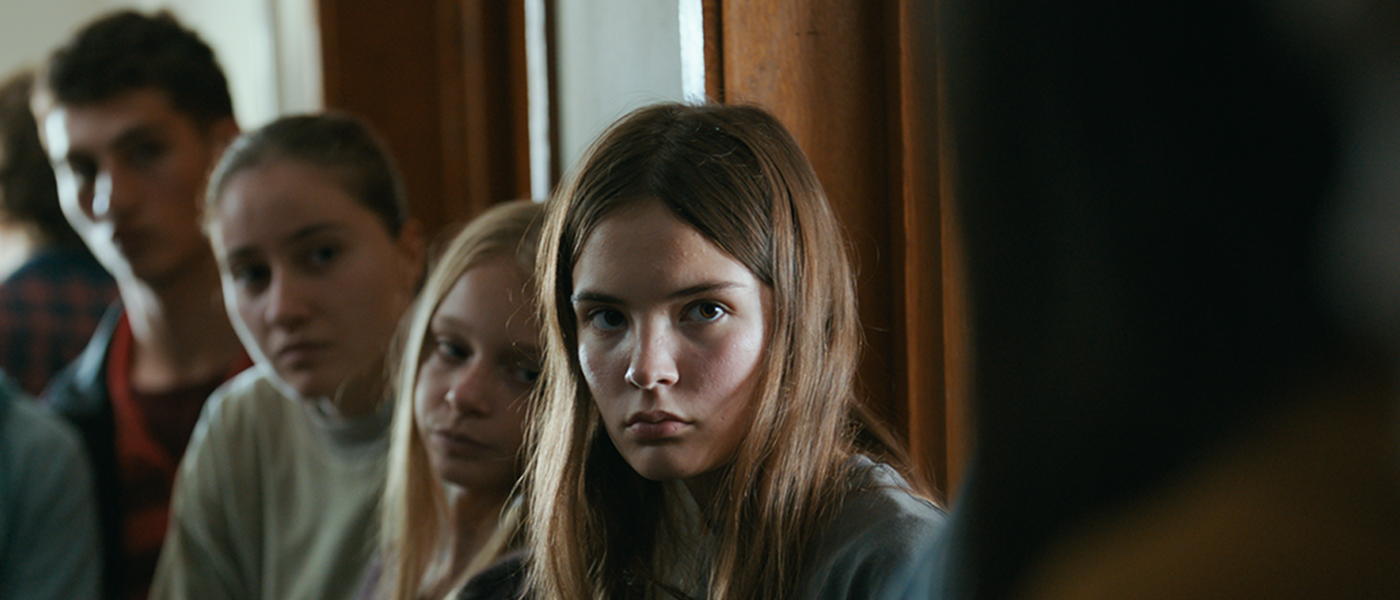
1990s, Pristina, Kosovo. The war is looming and tensions between residents are at their height. But Dua is facing a turning point of her own: adolescence. An intimate story and historical drama come together to paint a striking portrait of a young woman who must learn not only how to live, but how to survive.
Interview with Blerta Basholli
Like your first feature film, Dua is about characters trying to survive during wartime in Kosovo. Why is it important to you to revisit those times and to guide international audiences through it ?
It’s something I went through, and unfortunately, it's very relevant to what is happening in the world. Growing up in Kosovo, the war wasn’t just a historical event; it was something that lived in people’s behavior, in silences, in family dynamics, even long after it ended. War is not just missiles in the sky; war is everywhere, in a conversation, in the way you are treated, that feeling of threat in every corner, from your own neighbor. Yet people somehow find a way to dream, hope, love, listen to music, and for me, that was interesting to bring to the screen. I feel like through these kinds of perspectives, very human and intimate audiences relate, they see that people who go through war are the same as you, they love, struggle, dream, listen to the same music…
How did you work on recreating the 90’s on the screen?
With the help of my team. Recreating the 90s was not easy, especially now that Prishtina has changed so much. But it was really about building a world that feels lived-in rather than simply period-accurate. Of course, we paid close attention to details, costumes, locations, objects, and the texture of everyday life, but for me, it was just as important to capture the atmosphere of that time. We worked closely with the production designer and costume designer to really bring the feeling and vibe of that time.
Why did you choose to tell this story uniquely from this young girl’s point of view ?
Because it offers a perspective we rarely see, especially in stories about war. Girls at that age are navigating very specific questions about identity, belonging, their bodies, their place within a group, and all of that is happening quietly, often beneath the surface. What also felt important is that, for girls, war carries a different kind of threat, often less visible, more insidious. There is a constant sense of vulnerability that shapes how they move, how they behave. Focusing on her perspective allowed me to explore that intersection between the intimate and the political—the way larger forces quietly enter a young girl’s body and consciousness.
For Dua’s part you had to find an actress with the ability to project a lot of emotions without expressing it verbally. Did the casting process take a lot of time ?
Yes, it did take quite a long time; we searched for Dua and other teenagers for 9 months. We visited every school in Prishtina. I wasn’t just looking for someone who could carry a lot internally through presence, through silence, through very subtle expressions. Pinea was proposed to me by her mother but she didn’t want to be in the film. Still, something about her felt very authentic, I couldn’t get her out of my mind. She has this ability to convey complex emotions without needing to explain them, which was essential for the character. Luckily, she accepted, and we were blessed to work with her!