.png)


Interview with Berthold Wahjudi, "Vaterland" or A Bule Named Yanto director
by Léo Ortuno
by Léo Ortuno
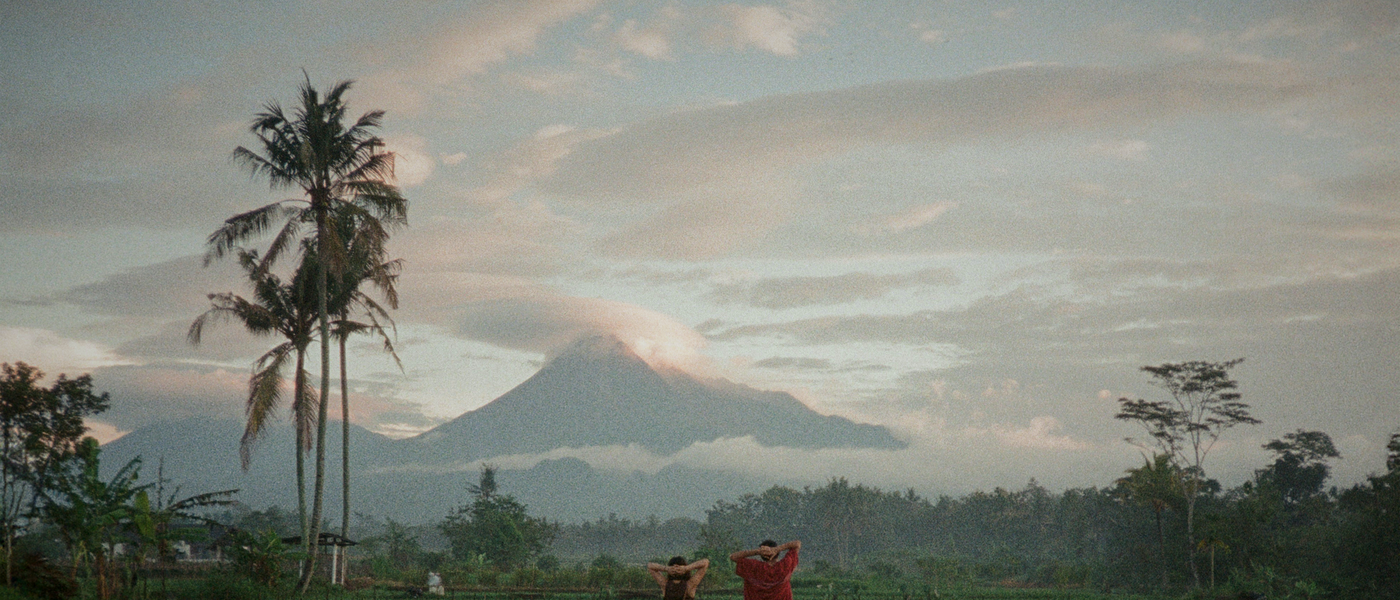
In this gentle chronicle, Berthold Wahjudi portrays a young man with a dual identity. Yalto lives in Germany and travels to Indonesia in search of his roots. In this journey of self-discovery laced with incisive humour, the photographs we take or discover prompt us to reflect on the meaning of images and the representations they convey. Through this in-between identity, Vaterland reconciles its protagonist’s inner worlds and suggests a new, unifying balance.
Interview with Berthold Wahjudi
Dual identity
I wanted to make this film to explore my own confused relationship with my racial identity. In Germany, I’m always perceived as an immigrant and sometimes a threat. But when I go to Indonesia, I suddenly become white, with some privileges. However, the common denominator remains that I’m perceived as an outsider to both societies. It can be painful and disorienting to experience your race as a sliding scale, but it also exposes the absurdity of its social construction. I started writing from personal experience, but at some point the script developed a life of its own.
We spent five months casting for this film, looking at over 300 people for Yanto and his sister Sara. In the end, my sister discovered our lead actor Aggai Saibuma, selling Indonesian food at a market stall. He and Sarah Muckarin Röser, the sister, both acted for the first time and did a remarkable job. It was a very long process but also very rewarding: I met more young people in the Indonesian diaspora than I had in my entire life, and all the conversations fed into the film’s development.
With disarming humour and tenderness
I was quite scared of going to Indonesia and subconsciously reproducing orientalist clichés. Growing up in the diaspora, we often romanticize our countries of origin because in Europe, we’re so used to defending their cultural value. I tried to avoid these trappings by staying close to my own experience. The film’s tenderness came naturally from my love for my friends and family in Indonesia.
Situations like a police control or Indonesian school children asking me for a selfie are always supremely awkward. There is an inherent comedy to them. They also reveal something deeper and through my films, I explore personal issues from a minority perspective. Humour disarms an audience and opens them up empathize with characters whose experiences differ from their own. Jokes become a survival strategy.
Questioning images
At their core, all political debates surrounding migration are about who belongs and who does not. I sometimes find myself obsessing over the image I project into the world. Will I be less likely to be policed in Germany if I shave my beard? Am I more likely to fit in in Indonesia if I dress a certain way? The political scientist Benedict Anderson has this term of ‘imagined communities’ to describe the process in which national identities form. As a filmmaker, I am particularly concerned with the power of images to either reproduce or challenge these imaginations.
In the film, Yanto has no control over how people perceive him. But his alienation resolves to an extent when he discovers a baby photo of himself at his Indonesian aunt’s house. Taking photos or making films can be extractive and reinforce racist or orientalist preconceptions. Family photo albums, however, are the purest form of creating community through images. My hope is that some audience members will recognize themselves in this film, the same way Yanto recognizes himself in those photos, and that this film can be a vehicle for creating community.
At La Semaine de La Critique