.png)


Interview with Arnas Balčiūnas, Class Photo director
by Grégory Coutaut
by Grégory Coutaut
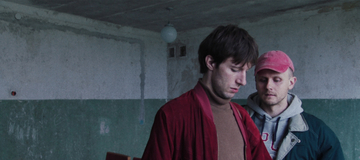
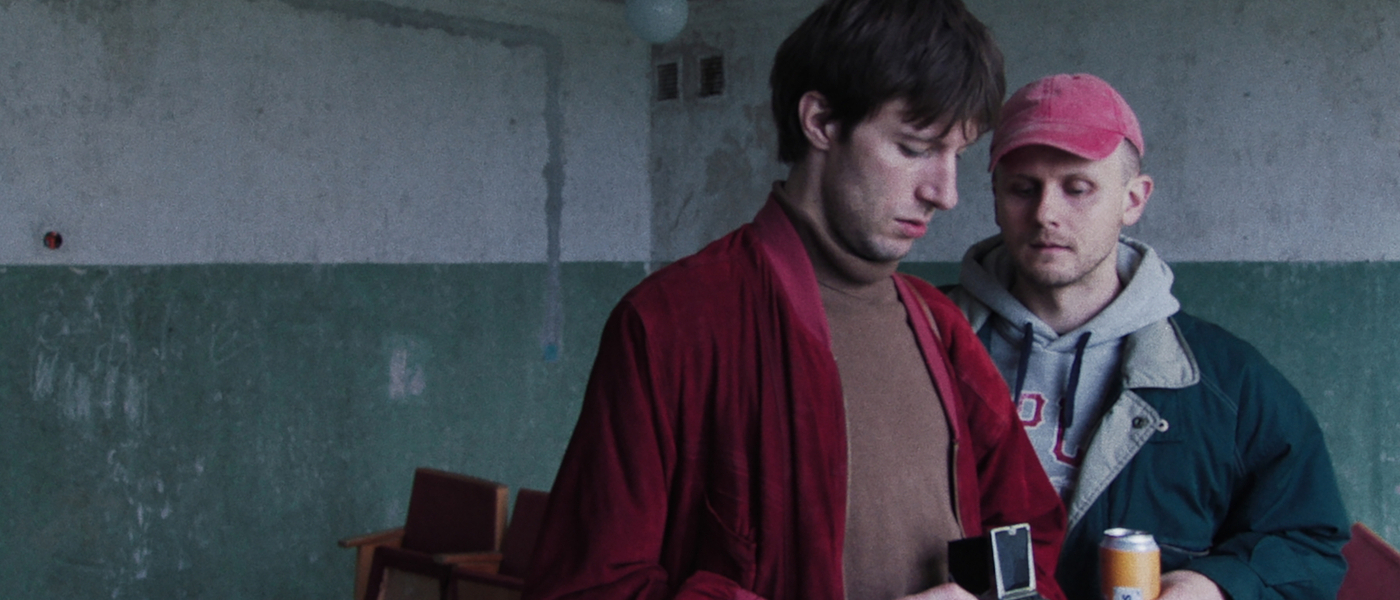
What is a class photo without any pupils? A solitary young man explores what remains of his childhood school. Among the seemingly deserted ruins, he runs into an old classmate who appears never to have left the premises. Past and present blur into one another as their shared exploration brings back memories of distant innocence and unfulfilled dreams. Framing this striking setting in a series of static shots of spellbinding poetry, Lithuanian director Arnas Balčiūnas invites us to a bittersweet reunion with the ghosts of our childhood friends.
Interview with Arnas Balčiūnas
School as a place of becoming
Two years ago, I took the opportunity of a trip back to my hometown to revisit my primary school, which had been abandoned since I left. School is a very peculiar space, where much of one’s identity is shaped and I really enjoy going on social media to see what has become of my former classmates, to see what path their lives have taken and how they have ended up where they are. Seeing my school in a state of complete disrepair, likely for the last time, left me with a strange feeling. I tried as much as possible to capture the atmosphere of this place which had played such a significant part in shaping who my classmates and I have become.
A political symbol
There are a great number of abandoned schools in Lithuania, because many of them closed down due to a dwindling population in rural areas. All of these schools were built under Soviet occupation, which is why most of them look roughly the same. I think that, for many of us in Lithuania, there’s a very clear idea of what a school should look like, and one of the main characteristics is the wall colour: always this bright, garish green. We chose this school specifically because it contained various historical layers: part was built in the final years of the interwar period, and another during the Soviet occupation of Lithuania, making it a rather large school for a rural area. That helped us create this labyrinthine quality.
A ghost film
There is indeed a fantastical dimension to Class Photo. The narrative structure is loosely inspired by the myth of Orpheus and Eurydice, in the sense that this abandoned school becomes a kind of underground world, a mental space where memories live. The film unfolds on two différent planes: a realistic story and an allegory, and the dialogues subtly highlights the duality. However, when we improvised with the actors, I always asked them to adhere to strict realism, even if the situations they were playing were far from ordinary.
Images as telling as the story
With cinematographer Milda Juodvalkytė, we wanted the photography to feel as though the building itself were watching these two characters, making it unnecessary to dramatise their conversations through close ups or to rely too heavily on editing. We also tried to quite simply replicate what Ignas does in the film: framing and capturing the space. The grain of the image also helped us not only to emphasise the various textures of the building, but also suggested to the viewer that several timelines may be overlapping within a single scene.
At La Semaine de La Critique