.png)


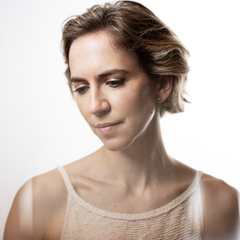
Interview with Aina Clotet, Alive director
by Laurent Hérin
by Laurent Hérin
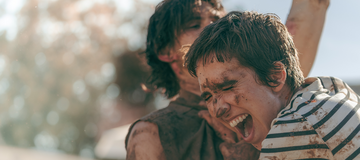
Viva, first film written, directed, and performed by Aina Clotet, is a sharp, vivid portrait of a woman in drought-stricken Catalonia. She delicately captures the tensions of this modern heroine as she searches for meaning, caught between a parched world and her inner turmoil.
Interview with Aina Clotet
Your film portrays a modern woman who fights, makes choices, falters, picks herself up, and keeps moving forward. Who inspired this character? Is it partly autobiographical?
Undoubtedly, this film stems from my deepest anxieties, from the desire to explore links between emotional dependency in romantic relationships and our most intimate fear: death. And even if I share a lot of Nora’s energy, the portrait is not autobiographical.
With Valentina Viso, the co-author of the film, we have built a character inspired by our experience as women in our forties in today’s world, and the way we feel things. Nora is indeed the physical embodiment of our fears and anxieties as well as our hopes and our sense of understanding what it means not just to be alive, but to feel alive.
Nora, like us, is in a constant struggle between body and mind, driven by a quest for pleasure, distraction, for life itself, even as she is haunted by a deep fear of ending up alone, since solitude reminds her of her own mortality. Through her experience with her mother’s illness, Nora has come to understand all too well that life is fleeting, and that is precisely because she is so afraid, that she longs, more than ever, to live intensely.
To tackle serious issues - Nora’s disease as well as a planet that is overheating - you choose comedy mingled with whimsy, and even touches of the fantastical (with these apparitions)?
We worked on the script trying never to lose the balance between tones: comedy and lightness, but also depth and tragedy. Our outlook on the world is infused in humour. We see life through humour. We simply cannot conceive life without humour, because the alternative is unbearable. Humour is our answer to anxiety and to fear, our way of resisting the devastating reality around us.
As for the fantastical elements, we found them to be a very effective and compelling way to convey Nora’s emotional state, her turmoils and obsessions, in the midst of this pervasive anxiety.
Why did you choose to set this story in a futuristic Spain (a form of dystopia that nonetheless remains grounded in realism), and what were your references or inspirations?
From the very beginning, we felt that Nora’s story needed a specific setting that could highlight the ideas, reflections, and emotions we wanted to explore. Over the years we were working on the script, Catalonia was experiencing a historic drought, which plunged us all into a state of anxiety. So it quickly became clear that slightly amplifying a situation that already existed would provide for the dramatic context we were looking for.
We also wanted to address mental health in some way. And we found it interesting that our protagonist – a scientist researching ways to extend the lifespan of cells, potentially enabling humans to live up to 120 years – finds herself at a point in her life when, both from a social and an environmental standpoint, it is becoming increasingly difficult to live a fulfilling and peaceful life.
The film’s whole scientific dimension draws on real, current, and highly promising research into cellular ageing conducted by the Can Ruti Hospital laboratory in Barcelona, where we were lucky enough to shoot.
You are an actress; what prompted you to direct? Is it challenging to act and direct at the same time?
LIke Nora, I’m the daughter of a scientist, from a family with a long science tradition; but unlike our character, my destiny took a turn when I was 11, when I happened to start acting in a very popular TV series in Catalonia. While completing my bachelor’s degree in audiovisual communication at UPF Barcelona, I discovered my passion for storytelling. At the time, becoming a director was not an obvious path: twenty years ago in Spain, there weren’t many female role models in directing. Thankfully things have changed. So I focused on my acting career, and continued to write.
A few years ago, I decided to start developing my own projects with the intention of directing them myself. I also wanted to create strong, complex female characters with a great sense of humour, and to play them.
Acting and directing at the same time is indeed very challenging, but I surrounded myself with a wonderful team that I fully trusted completely; we did extensive preparation, both in terms of directing (planning everything in great detail) and performance. I began rehearsing months in advance so that I could be fully confident on set. For me, it is very important to feel free and able to take risks while shooting, and I’ve realised that I can only do this if I have very carefully laid the groundwork beforehand. Ultimately, the key lies in having an excellent team that is both human and highly professional; and on this film, I was fortunate to be able to rely on these two vital elements, which allowed for a very intense and deeply rewarding experience.
At La Semaine de La Critique